
Advancing In-Process Surface Defect Detection with FlawSense II
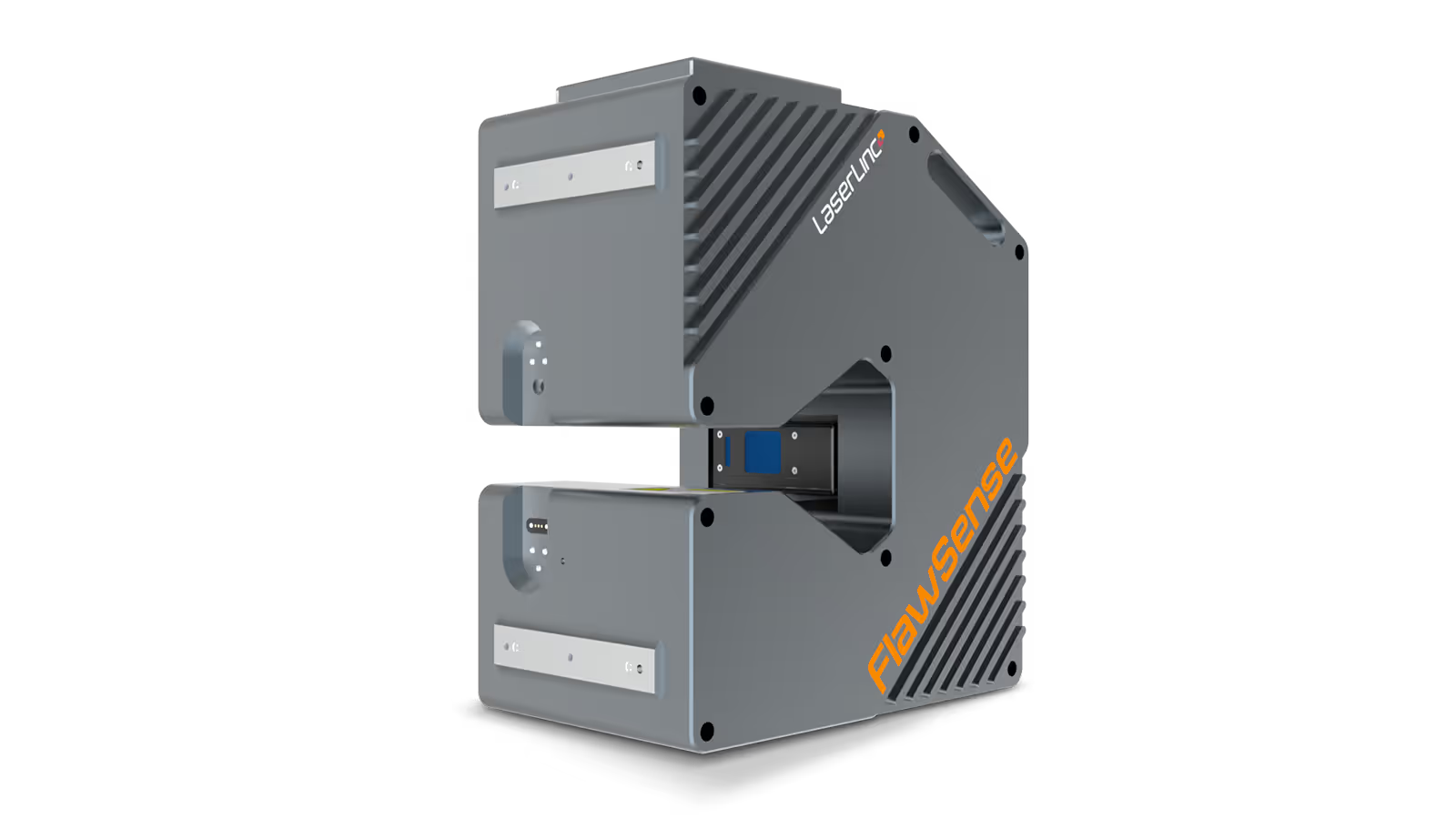
Surface defect detection remains one of the most challenging aspects of quality control in extrusion and tubing manufacturing. Traditional vision-based inspection systems often struggle with complex geometries, reflective materials, and subtle surface variations, leading to missed defects or false positives. As product tolerances tighten and regulatory scrutiny increases, manufacturers require more reliable and scalable inspection methods.
Manual inspection introduces risks that extend far beyond variability and labor cost. Human fatigue, distraction, and subjective assessment can allow critical defects to pass undetected, increasing the risk of product failure in the field. In medical manufacturing, these failures are not theoretical; they carry real consequences, including regulatory action, product recalls, liability exposure, and potential patient harm.
The next-generation FlawSense II system from LaserLinc addresses these challenges by using laser-line triangulation to generate a true 100% surface map of the product in process. Unlike camera-based vision systems that infer surface condition from lighting and contrast, laser-line triangulation directly measures surface geometry. This approach enables the system to detect defects based on physical surface variation rather than visual interpretation.
By mapping the entire surface, FlawSense II eliminates shape-related error, a common limitation in other inspection technologies. Variations in roundness, ovality, or part orientation can affect the accuracy of conventional systems, masking defects and shape variations and leading to inconsistent results. A full surface map allows defects to be identified independently and in real time of these geometric variations.
The updated FlawSense II platform builds on this measurement approach, improving durability, compactness, speed, and system integration for demanding production environments. Designed for continuous in-line operation, it provides manufacturers with consistent defect detection without reliance on manual inspection or post-process checks.
As manufacturers work to reduce scrap and rework and meet regulatory quality requirements in quality-critical applications, reliable in-process surface inspection becomes essential. The FlawSense II™ system addresses the limitations of vision-based inspection, laser micrometers, and manual methods by delivering consistent, real-time surface defect detection directly during production.