
Dual-Axis Laser Micrometers






4 YEAR WARRANTY
We’re so confident in our products that we guarantee every part we manufacture with an industry-leading four-year warranty.
TOTAL VU™
These products are compatible with the Total Vu™ platform for complete product and process monitoring, reporting, and control. VIEW TOTAL VU PRODUCTS
MADE IN THE USA
We’re a 100% U.S. owned and operated company. We’re proud to design and build our products at our Fairborn, Ohio headquarters.
ETHERNET INTERFACE
These products use a standard Ethernet connection to transfer data between the device and the host processor.
POWER OVER ETHERNET (POE)
These products receive power over the same Ethernet connection used for communications, thereby eliminating the need for a separate power source, power cable, or conduit. Currently available on Axion212, Axion222, and Triton330.
Dual-Axis Laser Micrometers for Diameter & Ovality Measurement
4 YEAR WARRANTY
We’re so confident in our products that we guarantee every part we manufacture with an industry-leading four-year warranty.
TOTAL VU™
These products are compatible with the Total Vu™ platform for complete product and process monitoring, reporting, and control. VIEW TOTAL VU PRODUCTS
MADE IN THE USA
We’re a 100% U.S. owned and operated company. We’re proud to design and build our products at our Fairborn, Ohio headquarters.
ETHERNET INTERFACE
These products use a standard Ethernet connection to transfer data between the device and the host processor.
POWER OVER ETHERNET (POE)
These products receive power over the same Ethernet connection used for communications, thereby eliminating the need for a separate power source, power cable, or conduit. Currently available on Axion212, Axion222, and Triton330.
Product Model Comparison
Axion203™ | Axion222™ | Axion230™ | Axion260™ | Axion2120™ |
|
|---|---|---|---|---|---|
| Measurement Range | 0.00158" – 0.079" [0.04mm – 2mm] | 0.003" – 0.85" [0.076mm – 21.6mm] | 0.007" – 1.15" [0.178mm – 29.2mm] | 0.016" – 2.2" [0.406mm – 56mm] | 0.028" – 4.5" [0.7mm – 114mm] |
| Measurements per second (Hz)¹ | 2400 [1200 per axis] | 800 [400 per axis] | 3200 [1600 per axis] 8000 [4000 per axis] (optional) | 3200 [1600 per axis] 8000 [4000 per axis] (optional) | 3200 [1600 per axis] 8000 [4000 per axis] (optional) |
| Gate Size | 0.114" [2.9mm] | 0.91˝ [23.1mm] | 1.18" [30mm] | 2.36" [60mm] | 4.72" [120mm] |
| Repeatability² Unaveraged | ±0.0001" [±2.5µm] | ±0.0001˝ [±2.5µm] | ±0.0004" [±10µm] | ±0.0011" [±28µm] | ±0.0022" [±56µm] |
| Repeatability² Two Second | ±0.000001" [±0.0254µm] | ±0.000005˝ [±0.125µm] | ±0.000005" [±0.13µm] | ±0.00001" [±0.25µm] | ±0.00004" [±1.0µm] |
| Positional Error³ | ±0.00001" [±0.25µm] | ±0.0001˝ [±2.5µm] | ±0.0001" [±2.5µm] | ±0.0002" [±5µm] | ±0.0004" [±10µm] |
| Approx. Dimensions [H x W x D] | 7" x 6.625" x 1.863" [177.8mm x 168.3mm x 47.3mm] | 5.9" x 10.2" x 1.25" [149.9mm x 259mm x 31.8mm] | 10.85" x 12.6" x 1.5" [275.6mm x 320mm x 38.1mm] | 14.5" x 16" x 1.75" [368.3mm x 406.4mm x 44.5mm] | 22" x 21.13" x 2" [558.8mm x 539.7mm x 50.8mm] |
| Approx. Weight | 6 lbs [2.7kg] | 5lbs [2.27kg] | 10 lbs [4.5kg] | 21 lbs [9.53kg] | 40.5 lbs [18.37kg] |
| Power requirements | 100-240 VAC 50/60 Hz 50 W max. | PoE(Power over Ethernet) Alternate: 12VDC @125mA (1.25A recommended) | 100-240 VAC 50/60 Hz 50 W max. | 100-240 VAC 50/60 Hz 50 W max. | 100-240 VAC 50/60 Hz 50 W max. |
Common Features |
|||||
| Axes of measurement | 2 | ||||
| Resolution | 0.000001˝ [0.025µm] | ||||
| Light Source | Visible red laser diode, Laser Class II, 675nm wavelength [nominal], < 1.0 mW | ||||
| Cabling | Ethernet Cat 5 or higher rating | ||||
| HMI Options | Total Vu™ [via NetLinc™, TLAser400™, or μLinc™], SmartLinc™ | ||||
¹ Measurement rate is the number of times per second each measurement field (or axis) is scanned (shown in square brackets). The value specified is the aggregate measurement rate for all axes.
² TLAser203 Repeatability applies to parts 0.08" [2mm] and under. | TLAser222 Repeatability applies to parts 0.8" [20.4mm] and under. | TLAser230 Repeatability applies to parts 1.0" [25.4mm] and under. | TLAser260 Repeatability applies to parts 2.0" [51mm] and under. | TLAser2120 Repeatability applies to parts 4.0" [101.6mm] and under.
³ TLAser203 Positional error applies to center 0.08" [2mm]. | TLAser222 Positional error applies to center 0.79" [20.3mm]. | TLAser230 Positional error applies to center 1.0" [25.4mm]. | TLAser260 Positional error applies to center 2.0" [51mm]. | TLAser2120 Positional error applies to center 4.0" [101.6mm].
®SolidWorks is a registered trademark of Dassault Systèmes SOLIDWORKS Corp.
Axion203
- Measurement range of 0.00158” to 0.079” [0.04mm to 2.0mm]
- Measurement Rate (Hz)¹ (standard): 1,200 / 2,400
- Gate Size .114″ [2.9mm]
- Approx. Dimensions 7″ x 5.8″ x 1.75″ [178mm x 147mm x 44.5mm]
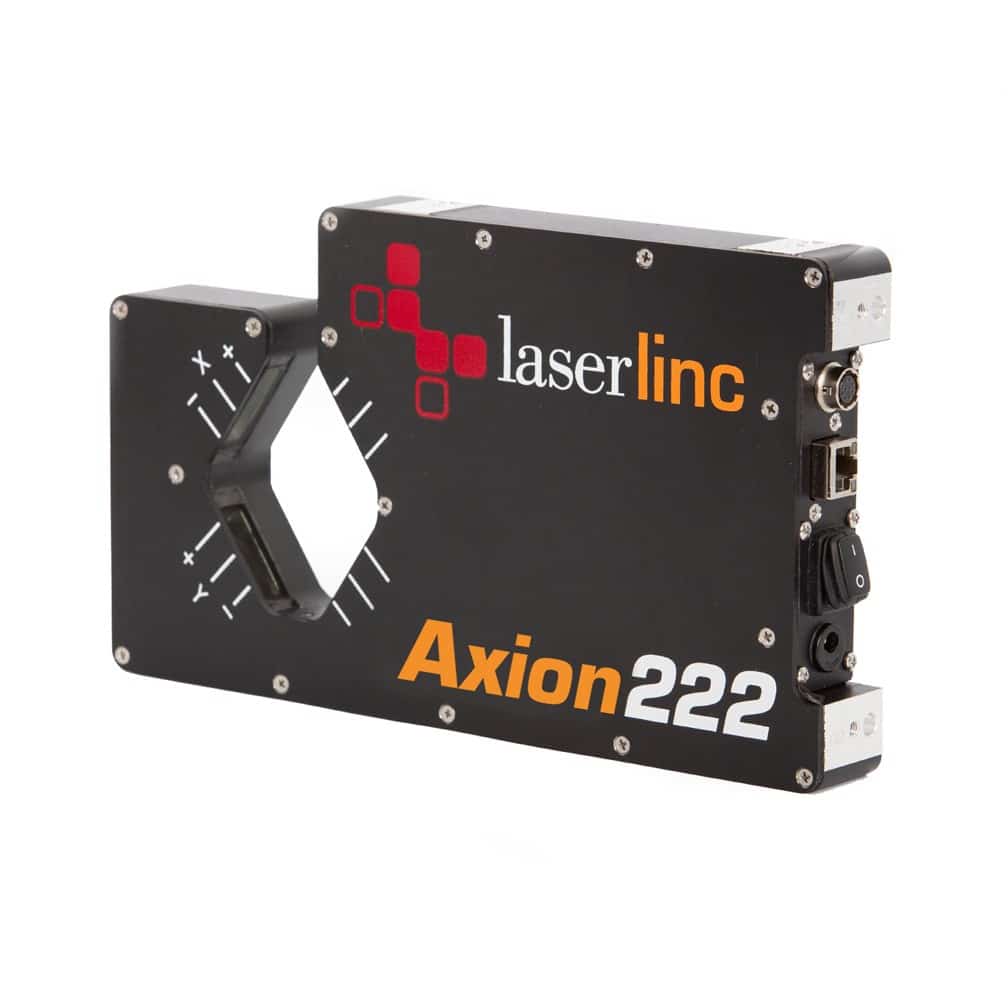
Axion222
- Measurement range of 0.003” to 0.85” [0.076mm to 21.6mm]
- Measurement Rate (Hz)¹ (standard): 400 / 800
- Gate Size .91˝ [23.1mm]
- Approx. Dimensions 4.5″ x 8.5″ x 1.25″ [115mm x 216mm x 32mm]
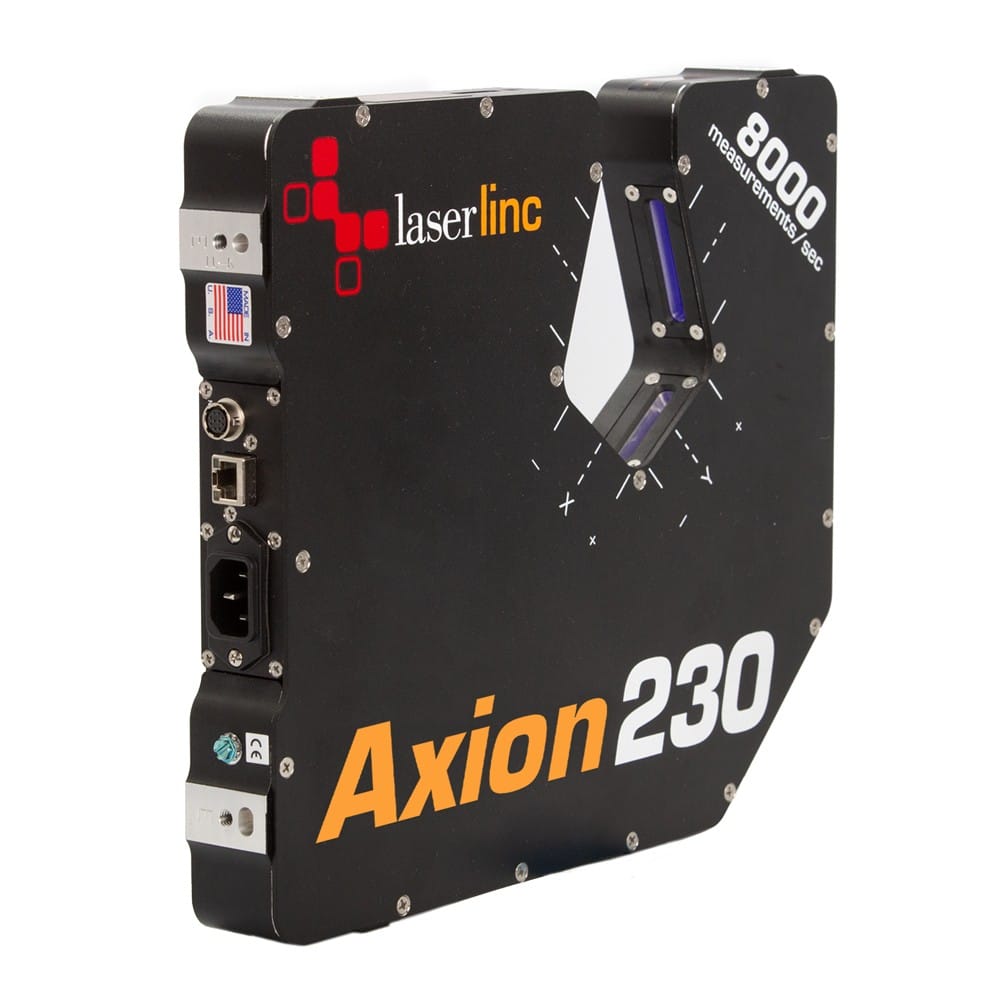
Axion230
- Measurement range of 0.007” to 1.15” [0.178mm to 29.2mm]
- Measurement Rate (Hz)¹ (standard): 1,600 / 3,200
- Gate Size 1.18″ [30mm]
- Approx. Dimensions 10.75″ x 13.25″ x 2.15″ [273mm x 337mm x 55mm]
Axion260
- Measurement range of 0.016” to 2.2” [0.406mm to 56.0mm]
- Measurement Rate (Hz)¹ (standard): 1,600 / 3,200
- Gate Size 2.36″ [60mm]
- Approx. Dimensions 19″ x 18″ x 3″ [478mm x 447mm x 76mm]
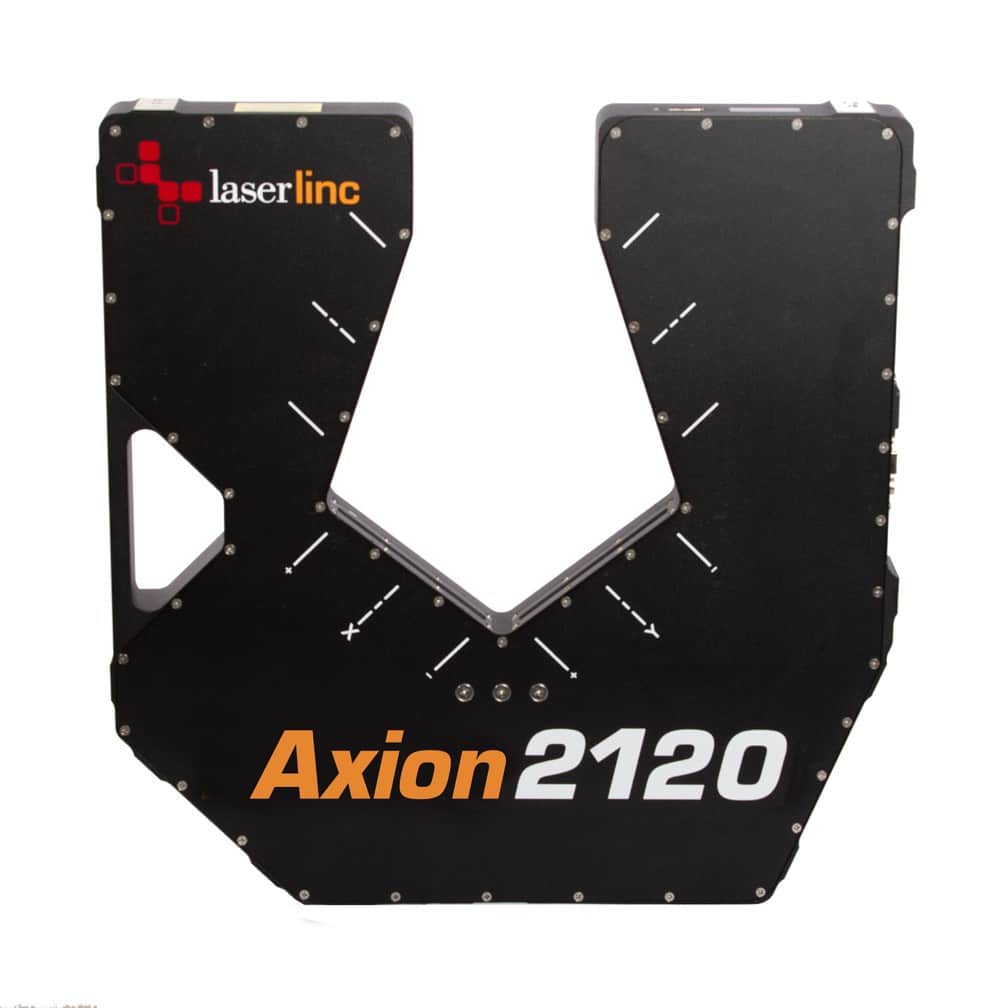
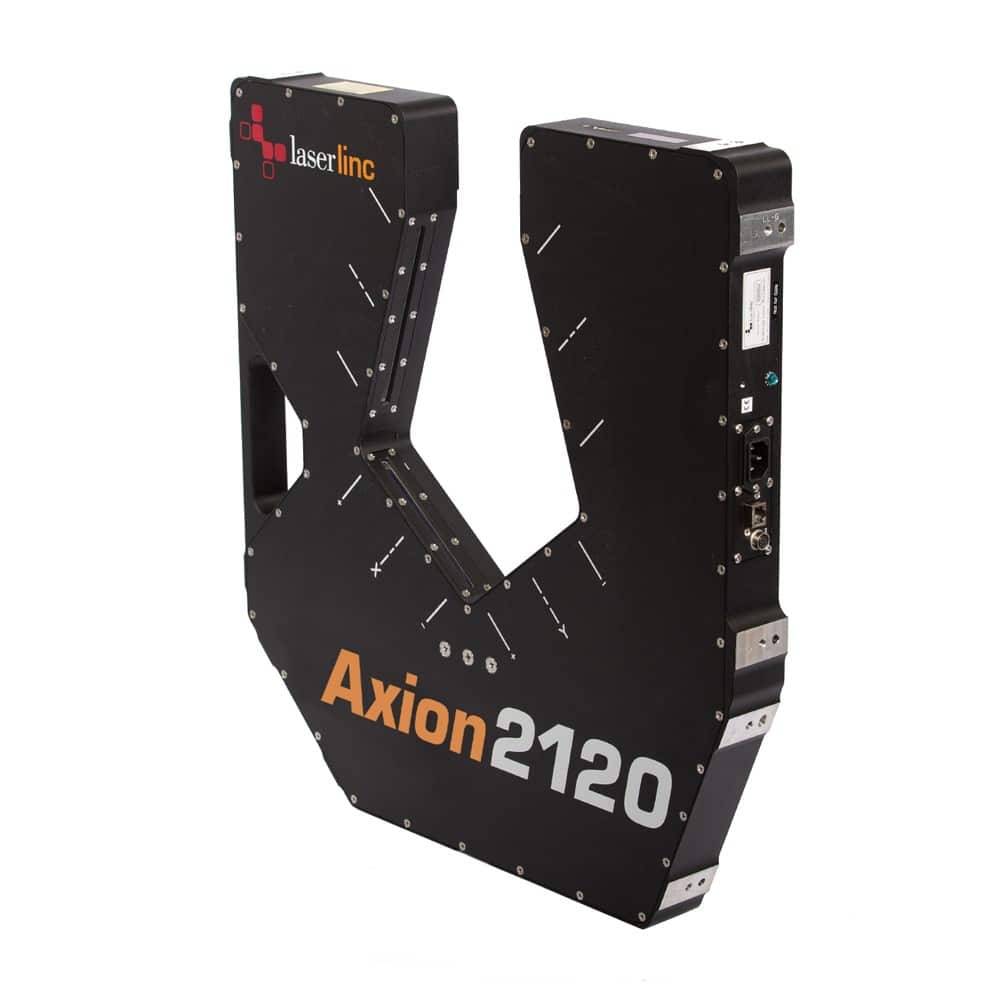
Axion2120
- Measurement range of 0.024” to 4.5” [0.61mm to 114.0mm]
- Measurement Rate (Hz)¹ (standard): 1,600 / 3,200
- Gate Size 4.72″ [120mm]
- Approx. Dimensions 19″ x 18″ x 3″ [478mm x 447mm x 76mm]
All Models
- Measure any material, even clear
- Mount in any orientation
- Use for in-process or benchtop applications
- Works with the Total Vu™ HMI and SmartLinc™ communication platform
- Available with Ethernet-based NetLinc™ signal interface
- Four-Year Warranty